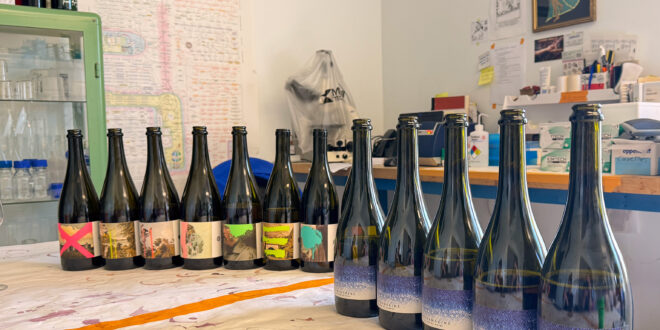
If there were a competition for California’s geekiest winemaker, I’m sure Michael Cruse would make the final round. His willingness to dive into the minutiae of (mostly sparkling) winemaking is unparalleled in my experience, something I’m reminded of when I show up to taste at his office, where a 4-foot-by-6-foot poster charting all the metabolic pathways known to science occupies almost the entirety of one wall. I’ll never forget the story he once told me of trying to culture his own yeast and making one of the biggest messes of his life.
The 46-year-old Cruse grew up in San Francisco and later moved to Petaluma. After studying molecular biology at UC Berkeley, Cruse worked in academic labs until he realized that he wasn’t feeding his soul. Inspired by a winemaker’s guest lecture during his college years, he tried his hand in the wine industry, first in enology labs and then in cellars, where he found his true calling.
After working his way up to Associate Winemaker at Merryvale’s Starmont winery in Napa, Cruse struck out on his own, opening a custom crush facility in Petaluma where he could make his own wines.
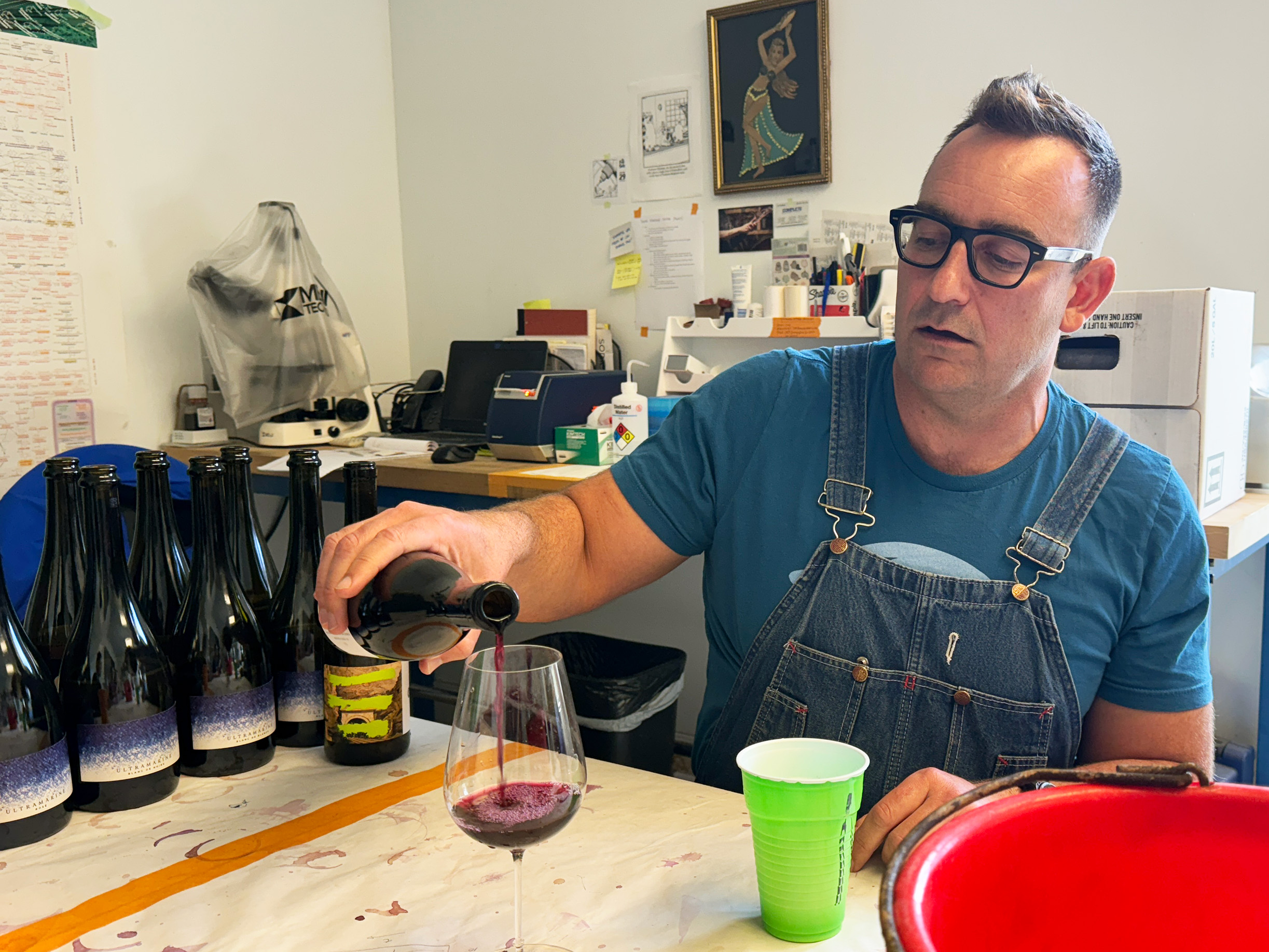 Winemaker Michael Cruse
Along the way, he talked his way into getting some fruit from the legendary Heintz Vineyard on the Sonoma Coast and launched California’s first serious single-vineyard, extended-tirage sparkling wine brand known as Ultramarine. I’ve written in depth about the phenomenon that is Ultramarine before here on Vinography.
In addition to Ultramarine, which is made in such tiny quantities that it couldn’t really sustain a career or a household, Cruse makes a line of wines under the Cruse Wine Co. label that includes pét-nats, sparkling wines, and still red and white wines. The wines range from single-vineyard expressions to California-appellation blends of fruit from various sources. These wines have been designed from the start to be affordable and approachable.
“I was becoming ossified in Napa,” says Cruse about his career before deciding to start his own brand. “I was on the path to make $150 to $200 bottles, and it was bumming me out. With Cruse [Wine Co.], it was always going to be about making wines that people would drink.”
To that end, says Cruse, he hasn’t raised prices on his eponymous wines in 10 years. Ultramarine, too, remains relatively affordable to those on the mailing list, having risen from $45 to $80 or $95 a bottle over the course of 11 vintages. Of course, it trades at much higher prices on the secondary market thanks to its scarcity and high demand.
As top cuvées from some sparkling wine producers in California approach $200, Cruse’s wines, especially those made under the Cruse Wine Co. brand, begin to look like serious bargains. Affordability aside, Cruse has strong opinions about the correct approach to making sparkling wine in California.
“How should we be talking about California sparkling wine?” says Cruse. “This is one of the questions I have. It seems to me that instead of being afraid of sunshine, or overly indulgent, we can have density and weight that feel ripe but not overly fruity, which is where oxidation can come in.”
There are several points in the sparkling winemaking process where oxidation can play a positive role in shaping the character of the wine, but the three primary ones are how the juice is handled prior to and during the fermentation, how the still wine is aged prior to the secondary fermentation in the bottle, and the introduction of older, reserve wine into the overall blend.
Cruz presses slowly, allowing the juice longer contact with oxygen, and opting to ferment in barrels without adding sulfur dioxide continues that oxidative approach. The wines are then aged in barrels for a time with sulfur added to prevent malolactic fermentation, but the barrels allow further micro-oxygenation of the still wines. Finally, perpetual reserves (as Cruse uses with his “Tradition”…
Source : https://www.vinography.com/2026/10/california-cult-bubbles-and-more-the-latest-from-ultramarine-cruse-wine-co