I had the good fortune last week of being invited to the home of a wine collector in San Francisco who is obsessed with older California wines. Over a home-cooked meal, he pulled treasure after treasure out of his cellar for his guests to taste blind. While I have had the privilege to taste some California wines dating back to the early 1970s occasionally over the last 20 years, I have never had the opportunity to taste so many well-cellared examples in a single sitting. I wasn’t the only one in the room taking detailed notes on the wines.
Everyone, the collector included, expressed astonishment at how few of these wines were dead or faulty. That’s all the more remarkable for the fact that most of these bottles were purchased in the last 20 years at auction. “When I’m just home drinking by myself, the hit rate on bottles like these is much lower,” admitted our host.
Just to frame the era in which most of these bottles were made, here are a few statistics about the California wine industry circa 1974.
California crushed enough wine grapes in 1974 to make approximately 243.4 million gallons of wine, or around 102 million cases of wine, roughly half of what is produced these days and a third of what California produced at its peak in 2017. Roughly one third of that volume would have been unfortified sweet dessert wine.
In 1975, according to Bob Thompson’s Wine Atlas of California with Oregon and Washington, Napa hosted between 40 and 45 wineries. According to the Sonoma Department of Agriculture, Sonoma hosted around 35 to 40 wineries in 1973.
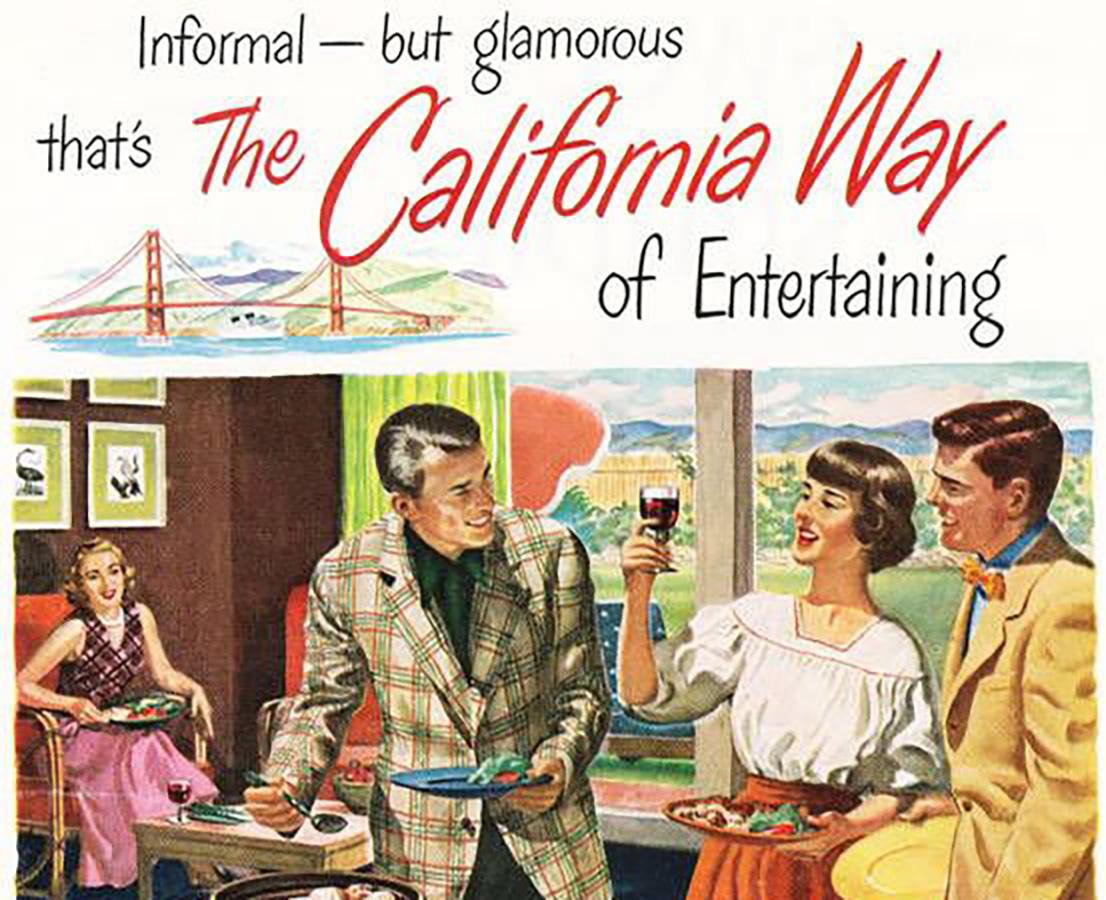 An California Wine Advisory Board advertisement from the 1940s
The five most planted wine grape varieties according to 1972 statistics were, in descending order of volume: Carignane, French Colombard, Zinfandel, Grenache, and Barbera. In total, these grapes made up roughly 44% of California’s winegrape production.
The average price per ton of wine grapes in 1974 was $146, down from $207 the year before. Last year the average price per ton across the entire state was $978 per ton. This year in Napa, Cabernet Sauvignon sold for $8,933 per ton, and Cabernet Franc sold for $11,131 per ton.
A lot of people I know in wine think of the 1970s and early 1980s as the golden age of California winemaking, pointing to the lower alcohol levels, the greater tolerance for pyrazines (thanks in part to both cooler times and much less strict sorting regimens) and a greater tendency to make wines with the expectation that they will be aged.
Most of the time, when people are talking about these older California wines, they’re talking about Cabernet Sauvignon. That tends to be most of what is left in people’s cellars now, in large part because it has tended to age better than most other varieties in California, perhaps with the exception of Petite Sirah, which can sometimes seem quite ageless. Zinfandels from this era can also be quite good, though I think there are fewer bottles out there. Pinot Noir remains rarer, its boom in plantings having come a bit later.
Not everyone loves the taste of old wine, of course, but when they’re good, there’s nothing quite like the combination of complexity and romance you get when a bottle older than yourself seems to have so much to say in the glass.
Tasting Notes
These wines are, by definition, all collector’s items at this point. Where I have been able to find the exact vintage for sale online, I have listed prices and provided links to purchase. If you are considering purchasing older wines, please do have a care for provenance. It makes a huge difference.
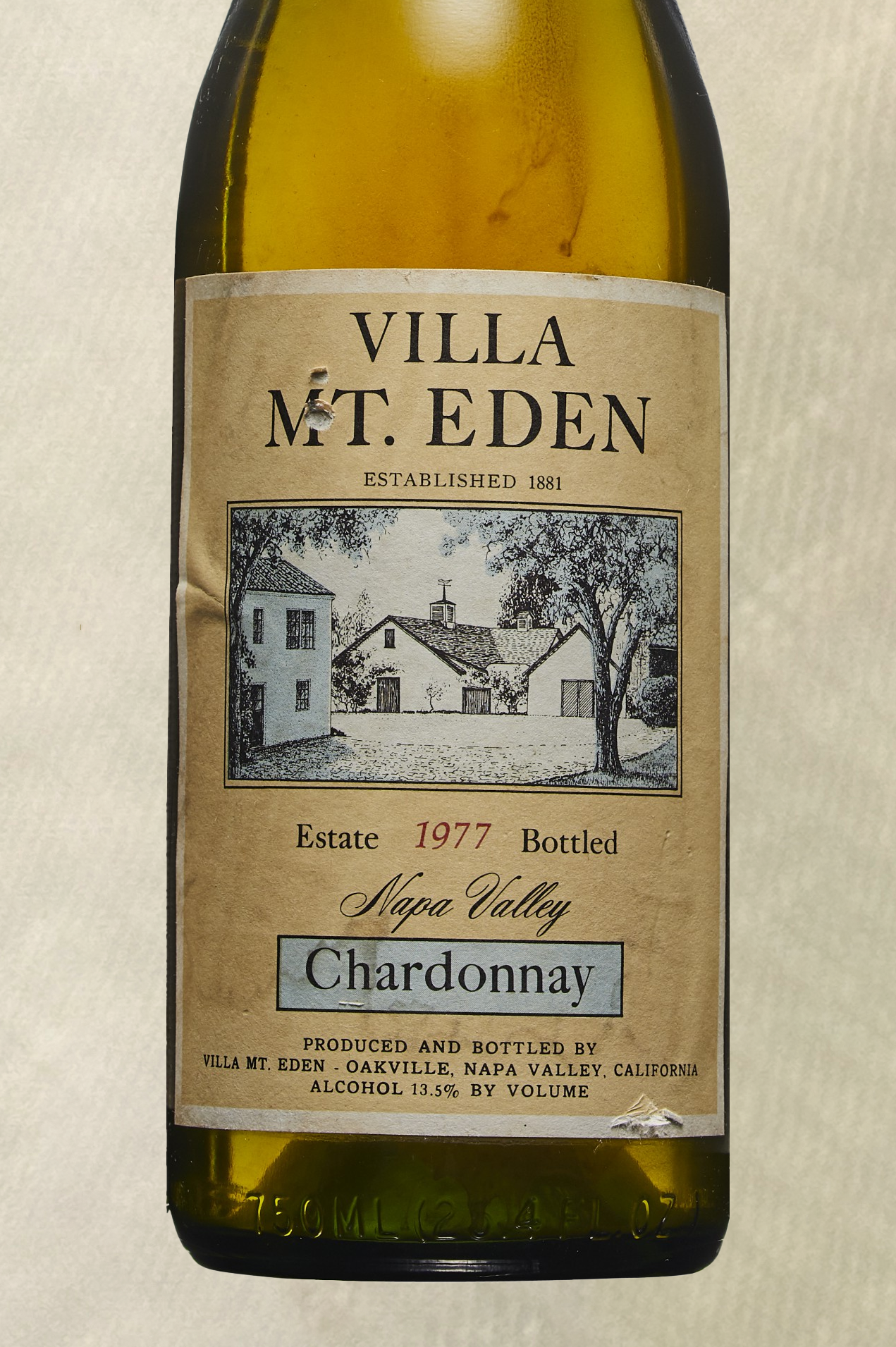
1977 Villa Mt. Eden Chardonnay, Napa, California
Medium to dark gold in the glass, this wine smells of candied citrus peel, butterscotch, and dried herbs. In the mouth, butterscotch, candied citrus, honey, dried herbs, and sassafras flavors have a nice sweetish complexion, with softer acidity and a very silky texture. There’s some oxidation…
Source : https://www.vinography.com/2026/10/tasting-a-bit-of-california-wine-history