

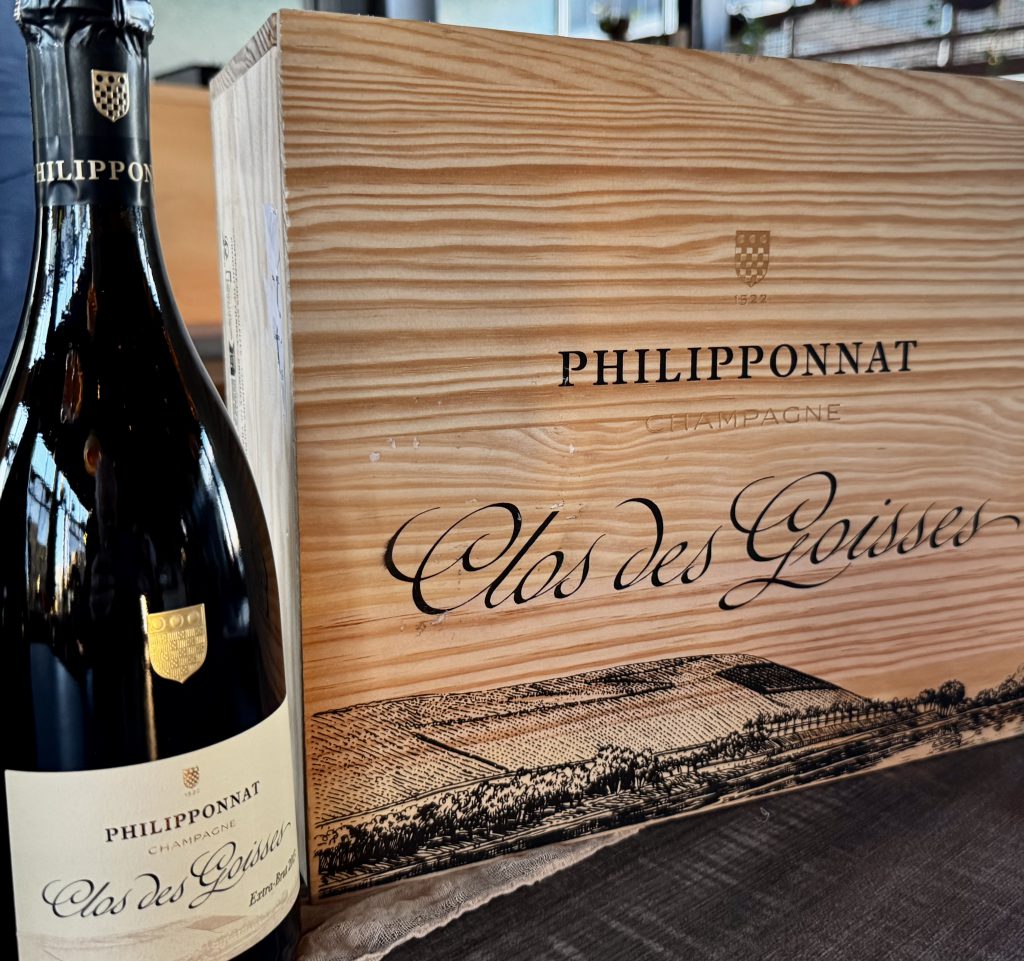
(credit drwinkler)
The 5.8-hectare Clos des Goisses walled vineyard in Mareuil-sur-Aÿ has been called the greatest vineyard in Champagne. Located just above the Marne River and planted with vines since the 16th century, it is incredibly steep (30-45% gradient) with very poor soils that barely cover the deep chalk bedrock. Its south-facing orientation combined with the gradient and a pure Belemnite chalk soil that accumulates heat make it one of Champagne’s hottest vineyard sites. While grapes are picked earlier than other sites, the ripe fruit never requires chapitalisation or a high dosage. The Philipponnat family purchased the vineyard in 1935 and immediately began making a single vineyard Champagne first called Les Goisses and later Clos des Goisses. I had the good fortune to recently taste the 2013 vintage of Clos des Goisses, one of the best vintages of recent decades. My tasting notes of Clos des Goisses are given below along with other Champagnes in the Philipponnat portfolio.
The Clos des Goisses is divided into 14 parcels, of which about half are used to make the single vineyard bottling. The upper section of the vineyard was planted in the 1950s, but the average age of vines overall is 35 years. It’s planted to about 70% Pinot Noir and 30% Chardonnay. The steepness of the site requires manual cultivation not all that different from farming several hundred years ago.
Charles Philipponnat is the current manager and winemaker of Maison Philipponnat which sources fruit from 29 hectares of mostly estate vineyards and 52 hectares of vineyards contracted with other growers. He ferments in a combination of stainless steel and used Burgundy oak barrels, each parcel vinified separately. Depending on the vintage, malolactic fermentation is usually at least partially blocked. While winemaking practices vary by product, Philipponnat in general uses a high percentage (30%) of reserve wines in its nonvintage Champagnes. The reserve is made solera style, i.e, a reserve perpetuelle.
In addition to the regular bottling, Philipponnat makes the Clos des Goisses LV, a Champagne aged, unmoved in the Philipponnat cellar for 25 years and disgorged six months before release. It’s production is very limited, and the price is high.

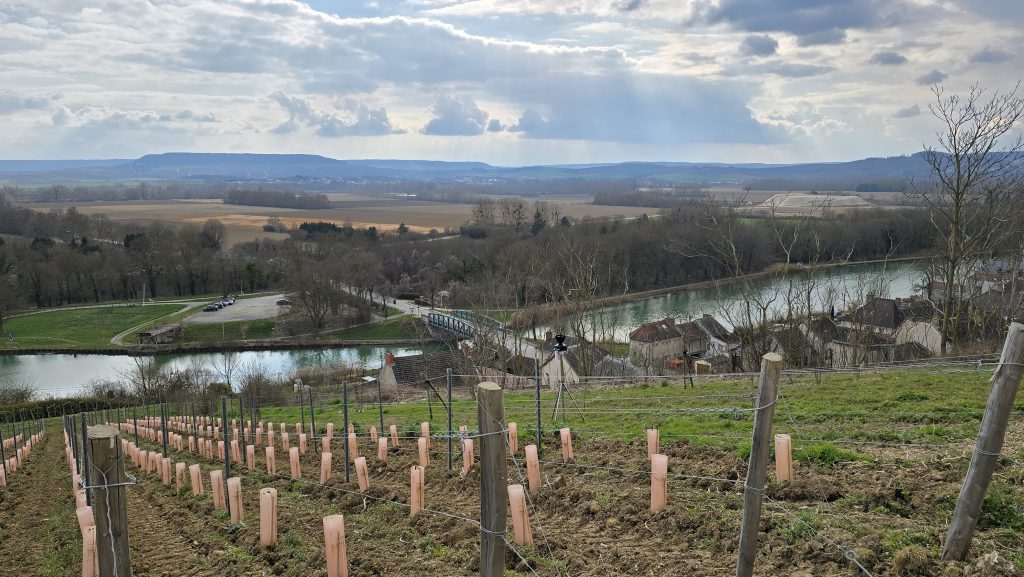
Clos des Goisses Above the Marne (credit Butler MW)
The Wines
Philipponnat Réserve Perpétuelle Brut 91 Fine mousse and persistent perlage. Red berries and toast show on the nose and reflected on the palate. Finishes on a chalky mineral note. A blend of 65% Pinot Noir, 32% Chardonnay and 3% Pinot Meunier from the 2021 base year and 56% oak aged perpetual reserve. 77% of the wine goes through malo. Dosage 8 g/L. 12.5% alc.
Philipponnat Brut Rosé 91 Pink-copper salmon color. Opens with scents of fresh red fruit, cherry and wild berries mirrored on a crystalline pure palate. Fine mousse and good length, finishing with a hint of sweetness. A blend of 68% Pinot Noir, 30% Chardonnay and 2% Pinot Meunier including 6% red wines from Mareuil-sur-Ay and Les Riceys and reserve wine aged in oak. 9 g/L dosage.
Philipponnat 2019 Blanc de Noir Extra Brut 93 Aromatic bouquet of red apples and berries. The palate reveals notes of red berries, cherries with a light brioche note. Beautifully balanced with bright acidity and a lingering finish. 100% Pinot Noir sourced from Montagne de Reims, Mareuil-sur-Ay and Avenay in a perfect vintage. 71% fermented and aged in oak with no malo. Dosage 4.25 g/L. 12.5% alc.
Philipponnat 2013 Clos des Goisses Extra-Brut 98 Champagne’s first single vineyard wine from the 5.5 ha, steeply (45°) sloped, Clos de Goisses vineyard facing south over the Marne river. The cool, late 2013 vintage produced even lower yields than usual. An exceptional wine revealing white and yellow orchard fruits along with honeyed pastry and saline and toast notes. Densely flavored, stunning mouth feel, and finishing with lingering chalky minerality. 85% Pinot Noir, 15% Chardonnay partly (50%) vinified in oak barrels (no malo) and aged years on the lees. From the late harvested 2013 vintage. Dosage 4.5 g/L 12.5% alc.
Source : https://i-winereview.com/blog/index.php/2025/12/15/philipponnats-clos-des-goisses-current-releases/